


Space Park Perspectives
A bold new chapter begins for the Leverhulme Centre for Humanity and Space, as its first Spring Symposium brings together researchers exploring how we imagine, experience and shape life beyond Earth — from medieval astronomy to future space policy, and everything in between.
2026 marks the beginning of the Leverhulme Trust’s investment in the University of Leicester’s Leverhulme Centre for Humanity and Space (LCHS). We have kicked off the year by welcoming seven postdoctoral research associates into the community and are currently recruiting for our first PhD researchers, who will begin in the autumn.
This week, we held our LCHS Spring Symposium 2026, giving our Research Associates the opportunity to share their existing and upcoming research with the wider community. It really was our first small step — one that foreshadows the giant leaps to come.
The afternoon was truly synoptic. Reflecting the Centre’s focus on outer space and humanity, the symposium took us from the mountains of Thailand to reading science fiction curled up on the couch; from the cloisters of 11th-century monks in Malmesbury Abbey to strategy rooms exploring 21st-century nuclear deterrence in space; and from US policy documents to geological archives in Cambridge — quite the journey in four hours.
Each of these perspectives brings a new dimension to what Dr Lauren Reid described as the investigation of what is liveable, knowable and imaginable about outer space and our place within it.
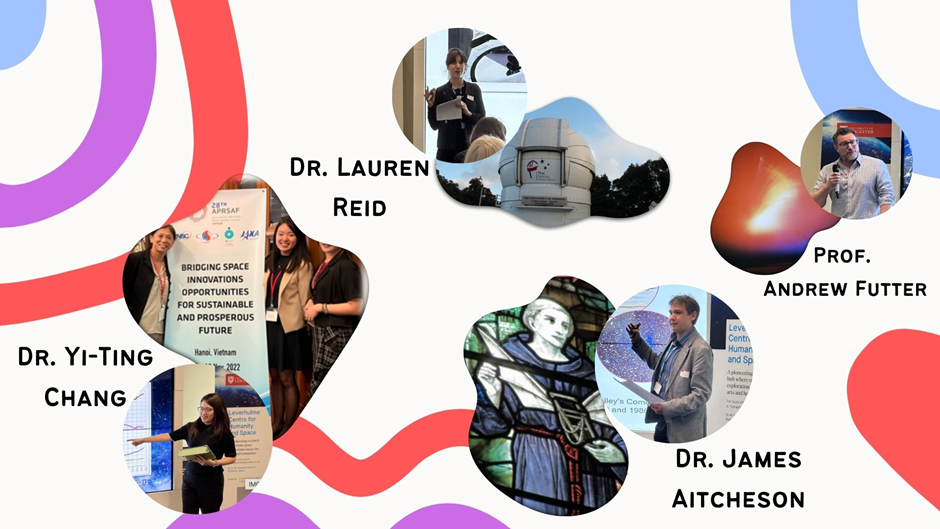
Our researchers are tackling how a range of concepts shape the space sector today. Dr Yi-Ting Chang explored the emergence of ‘sustainability’ in US policy documents since 2008, and how this has shaped the politics of space diplomacy worldwide.
In contrast, Dr Tara Smith examined ‘awe’ — as understood in psychology laboratories, science fiction, and public engagement with space. She highlighted how cultural context and language shape both what awe represents and what it can mean.
LCHS Director Professor Andrew Futter outlined a roadmap for his upcoming work on how ‘nuclear’ proliferates through space politics — as a policy concept, a norm, a militarised capability, an engine power source, and a lingering shadow of risk from past tests and potential accidents.
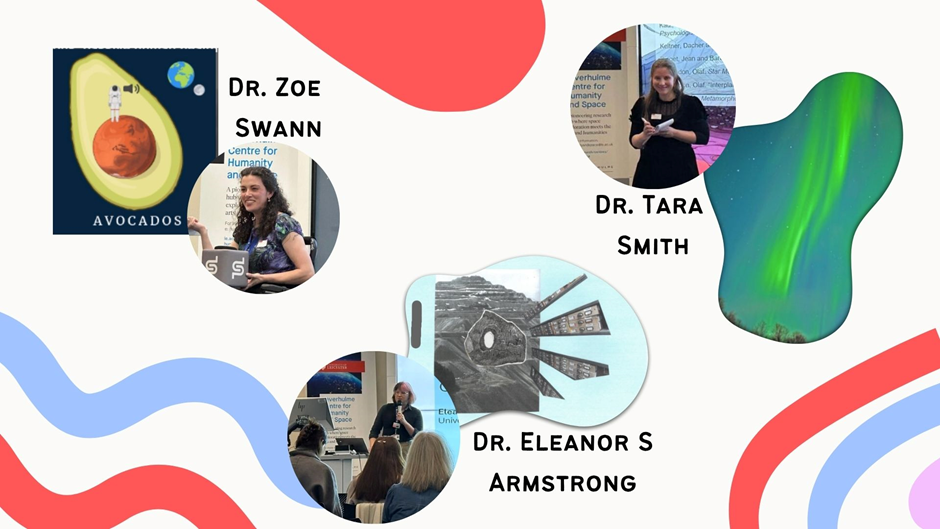
In her presentation, Dr Lauren Reid asked how communities in Thailand — who engage with outer space through both astronomical observation and meditation — can help unsettle our assumptions about what it means to know, understand and build for worlds beyond our own. Her upcoming work also explores how space technology companies are thinking about reproduction and agriculture in space.
Dr Zoe Swann’s research brings together the experiences of long-term astronauts and long COVID patients. She argues that studying the voices of long COVID patients — particularly their expressions of fatigue and emotion — could help reshape how astronauts understand and take ownership of their monitoring in space, supporting them to thrive in off-Earth environments.
Finally, what can we learn from materials stored in our archives? Dr James Aitcheson turned to the records of Malmesbury Abbey to explore how 11th-century monastic astronomers understood comets. He argued that these texts reveal a far more complex and sophisticated understanding of celestial phenomena than is often assumed of medieval astronomy.
Looking to a geological archive, Dr Eleanor S Armstrong traced the journey of a meteorite from the veld of the colonial Cape in South Africa to storage facilities on the outskirts of Cambridge. Using remix methods such as collage and found poetry, she gestured towards the idea that a meteorite might ‘long’ to be reunited with its fragments.
The richness of interdisciplinary work at LCHS is made visible through the communities that inform it. From UFO watchers, science fiction writers and astronomers imagining worlds beyond our own, to participants in research across medical, psychological, religious and citizen science contexts — and those shaping military, political and scientific agendas — all play a role.
Over the coming years, we hope many of these communities will engage not only with our research, but with our events and outputs, helping to shape the urgent work of understanding how humanity engages with outer space.
Our programme of events to inaugurate LCHS in 2026 continues in the autumn, including a Launch Event at the National Space Centre, our inaugural Annual Lecture delivered by Professor Asif Siddiqi, and the Autumn Symposium, where members of the wider LCHS community and our PhD researchers will present their emerging research.
This work is made possible by the dedication of LCHS staff Sally Utton and Laura Nevay.
To stay up to date with our events — including early access to registration — sign up to our mailing list (humanityandspace@leicester.ac.uk) and follow LCHS on LinkedIn.
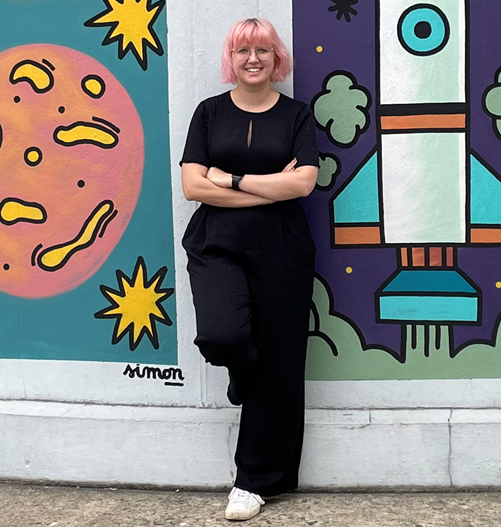
Eleanor S Armstrong is a Space Research Fellow at the University of Leicester based in the Leverhulme Centre for Humanity and Space, where she is building the Constellations Lab (on Outer Space & Feminism). The overarching focus of her research is on the coproduction of physical sciences and culture.
Space Park Perspectives brings together science, society and the humanities to explore how space is shaping life on Earth — and beyond.
To explore Space Park Leicester partnerships, missions, residents, facilities, training programmes and innovation products, visit space-park.co.uk or to learn more about the University of Leicester visit le.ac.uk/.