


Leicester climate researcher to represent Bosnia and Herzegovina as a Youth Representative at COP31
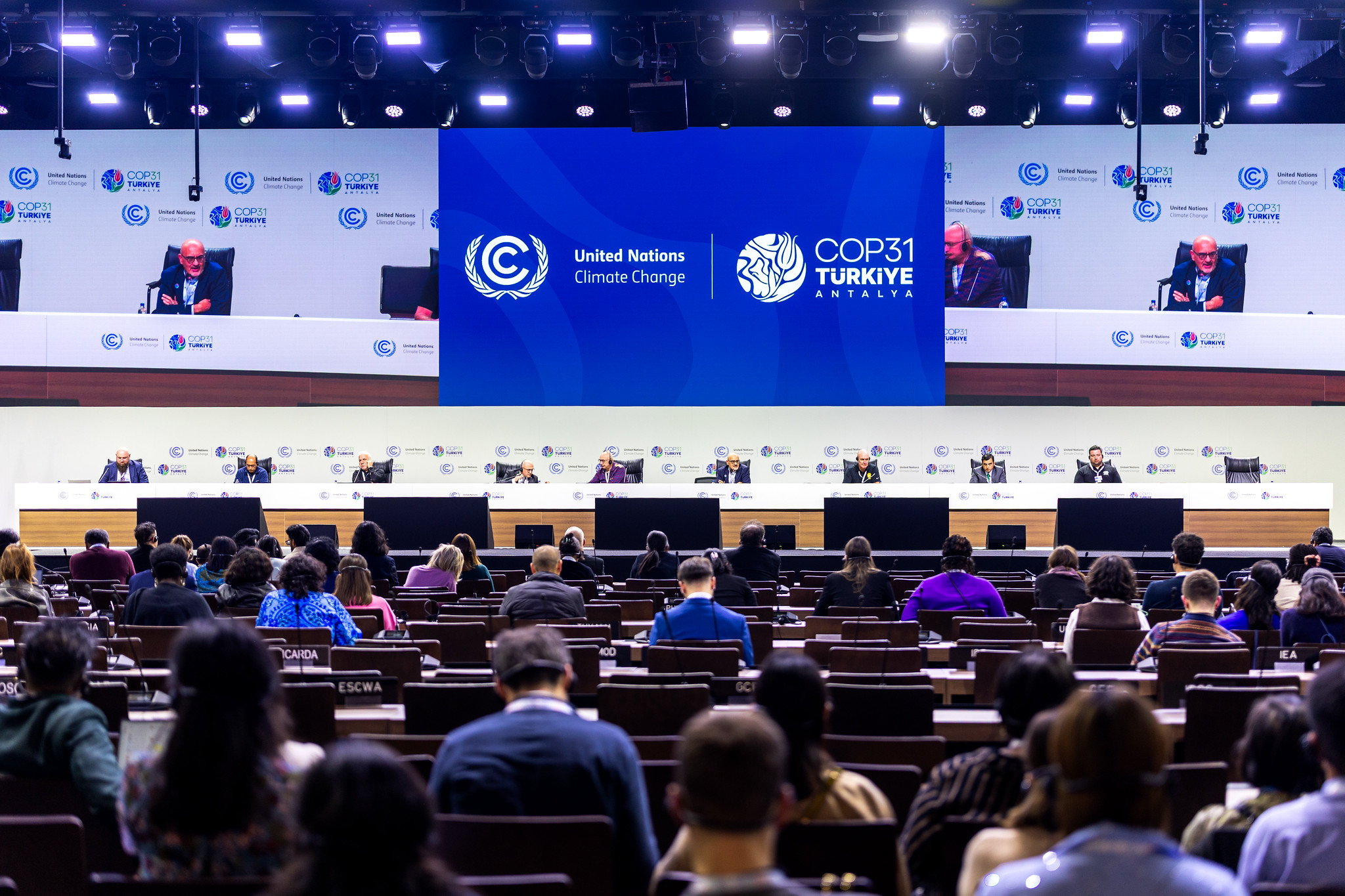
Space Park Leicester postgraduate researcher Nedim Sladić will represent his country, Bosnia and Herzegovina, as a Youth Representative at COP31, the United Nations climate change conference taking place in Antalya, Türkiye from 9 to 20 November.
Nedim, who is currently a 3rd year PhD student in the School of Physics and Astronomy focusing on climate modelling at the University of Leicester, was a meteorologist and weather presenter for four years and works as a junior climate researcher.
With support from UNICEF Bosnia and Herzegovina, he aims to elevate youth voices in climate action. He seeks to raise awareness and address local climate challenges where public understanding remains limited.
COP31 is the annual United Nations Climate Change Conference, a global summit where world leaders and delegates gather to negotiate international climate action.
Nedim was selected by the UNICEF Bosnia and Herzegovina team and the country’s previous youth delegate, Layla Jusko Serdarević, following his meteorological and climate advocacy on social media and in the Bosnian and Herzegovinian mass media.

On representing his country at the conference, Nedim said:
“Undoubtedly, it is an excellent opportunity, but it is simultaneously a great test and a chance to showcase my homeland in the brightest light.”
Nedim said his biggest concern about climate change is: “The sharp rise in Earth’s energy imbalance, which has significantly amplified over the last 20 years due to anthropogenic greenhouse gases.”
His concern is backed by the World Meteorological Organization’s (WMO) State of the Global Climate 2025 report, which confirmed that 2015-2025 were the hottest 11 years on record, with 2025 about 1.43 °C above the 1850-1900 average. The report also states that the Earth’s energy imbalance is one of the key climate indicators.
That advocacy reflects a belief that runs through his work: that young people must be part of the climate conversation, because they will live with its consequences the longest.
Nedim said: “Our youth must be actively involved in discussions, and their voices must be heard and respected. We cannot afford to put them aside or underestimate their competence.”
But he added that this comes with a paradox: “It is also unfortunate that they are the ones who will inherit the burden of our carbon footprint and the consequences a warmer climate poses to society. Their voice, hence, has much stronger weight and they must fix the mistake previous generations did not.”
At the conference he will focus on UNICEF’s latest global report on climate policies that will address child health and their vulnerabilities. He will also highlight the critical intersection of environmental degradation in Bosnia and Herzegovina.
He revealed the main points he aims to address will be: Air quality, water security, food and soil security.
Nedim’s PhD research at the University of Leicester over the past two and a half years has helped prepare him for the role. Supervised by Dr Tim Trent, Dr Adam C. Povey, Professor Richard P. Allan, and Dr Kate Willett from the Met Office, he is building an energy balance climate model to investigate hydroclimate characteristics in a warmer climate.
Nedim said: “This research has allowed me to expand my knowledge well beyond a traditional meteorological background. This was my first hands-on experience with climate modelling, which beautifully bridges my foundational interest in operational meteorology with deep climate science.”
His advice to students who want to get involved is: “Don’t be afraid to talk about the climate crisis with your peers. From extreme weather to the litter on your local streets, every conversation matters. Activism belongs to everyone, and small local steps lead to massive global impacts. Use your voice on social media accounts to call out higher authorities directly and transparently.
“Be bold and ask the ultimate question: ‘Quo vadimus?’ (Where are we going?). Because right now, the answer matters more than ever.”
To explore Space Park Leicester partnerships, missions, residents, facilities, training programmes and innovation products, visit space-park.co.uk or to learn more about the University of Leicester visit le.ac.uk/.
Main image: COP 31 ‘Around the venue’ (Photo: © UN Climate Change – Kubilay Citfci)
Explore More Stories
- City farm receives much needed funding from CGI
- Leicester climate researcher to represent Bosnia and Herzegovina as a Youth Representative at COP31
- Space Park Leicester experts take climate research to the world stage at COP31
- Leicester scientists chosen to continue pioneering space mission’s legacy as Swift returns to Earth after 22 years
- Explore Space Park Leicester during University of Leicester Open Day