


Early-risers may catch “Father Christmas” on his way back to the North Pole via the skies above the UK

This Christmas morning, children and their grown-ups across Leicester and beyond may get the chance to glimpse something magical in the pre-dawn sky which, according to experts at Space Park Leicester, could very well be Santa and his reindeer making their way home.
As dawn breaks on December 25, there will be a prime opportunity to look up. The International Space Station (ISS) is due to make a “high pass” at 06:18 local time, soaring to around 60° above the horizon and, weather permitting, visible until around 06:23. The sun doesn’t rise until about 08:15 offering perfect conditions for a celestial sighting.
Josh Barker, Education and Outreach Officer at Space Park Leicester, the University of Leicester’s £100 million space research and innovation hub, said:

“If you’re up early on Christmas morning, get the kids outside to point up and watch Father Christmas fly away after delivering the presents — the ISS will appear as a bright, solid dot floating across the sky.”
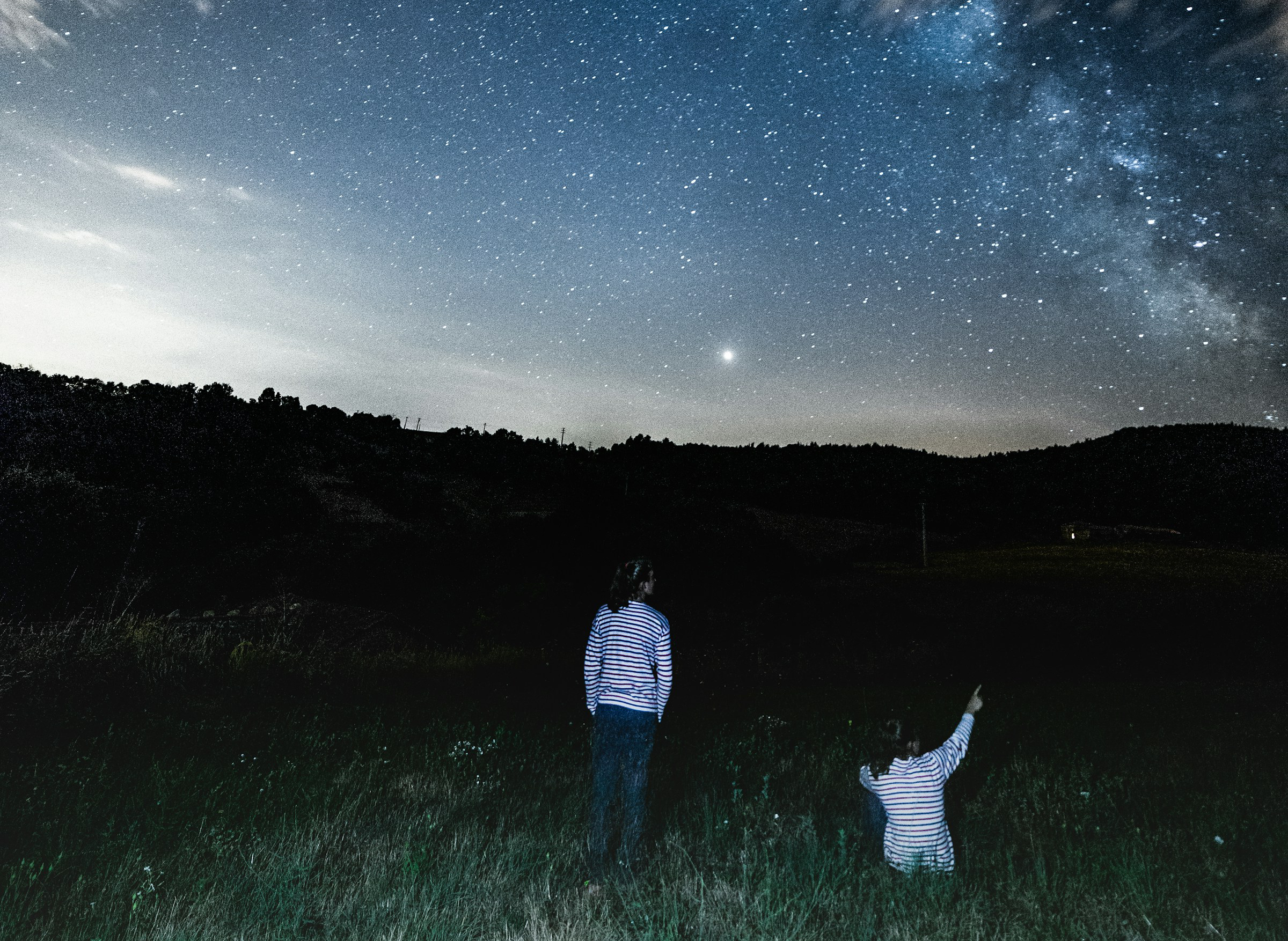
According to Space Park Leicester, the ISS will rise in the west, curve high across the sky toward the south, then vanish over the eastern horizon. It is likely to pass close to the constellation Leo. Onlookers should look for a steady, bright light, moving smoothly unlike a blinking plane, crossing the sky at a consistent pace. Because the ISS reflects sunlight off its large solar arrays, no telescope or binoculars are needed just clear skies, darkness, and a dash of Christmas spirit.
The International Space Station (ISS) can be seen with the naked eye as it orbits Earth at an altitude of roughly 250 miles (400 kilometers). Traveling at an incredible speed of about 17,500 miles per hour (28,000 kilometers per hour), the ISS often looks like a bright, fast-moving star gliding across the early morning sky.
To spot the ISS overhead, viewers should choose a location with a clear view of the sky and minimal light pollution. No telescope or binoculars are required because the space station is visible to the naked eye as a steady, bright light moving across the horizon. In fact, it’s one of the brightest objects in the night sky aside from the moon, thanks to sunlight reflecting off its large solar panels.
Orbiting Earth every 90 minutes, the ISS completes about 16 circuits around the planet each day. While December 25 provides an especially magical opportunity to watch the station soar overhead in the early morning, many other viewing chances occur throughout the year. For accurate sighting times anywhere in the world, NASA’s Spot the Station tool offers up-to-date information on when the ISS will be visible from your location.
Josh added: “I have a fond memory from about a decade ago of heading outside with my dad and grandfather to show the ISS to a neighbour’s child who promptly declared it must be Father Christmas.
“Their face lit up, and to the relief of their parents they were suddenly very keen to get back to bed so as not to miss their presents.”
Space Park Leicester encourages families to treat this as a light-hearted, magical way to blend festive wonder with real astronomy. And for older children or curious grown-ups, it’s also a chance to talk astrophysics, about what the ISS is, how it orbits Earth, and why we see it as a glowing dot drifting across the heavens.
For those wanting the technical lowdown, the full pass details can be viewed here.
For an idea where to look, a helpful visual reference of the sky track is available here: https://www.youtube.com/shorts/3RvhoNB4l2k
Whether you’re a believer in flying reindeer or just in satellites, Christmas Day 2025 offers a moment to catch a final glimpse of the man in red speeding home across the sky.
Main image: Reindeer stock image
To explore Space Park Leicester partnerships, missions, residents, facilities, training programmes and innovation products, visit www.space-park.co.uk or to learn more about the University of Leicester visit https://le.ac.uk/.