


Research group including University of Leicester astronomers receives one of the world’s largest research prizes
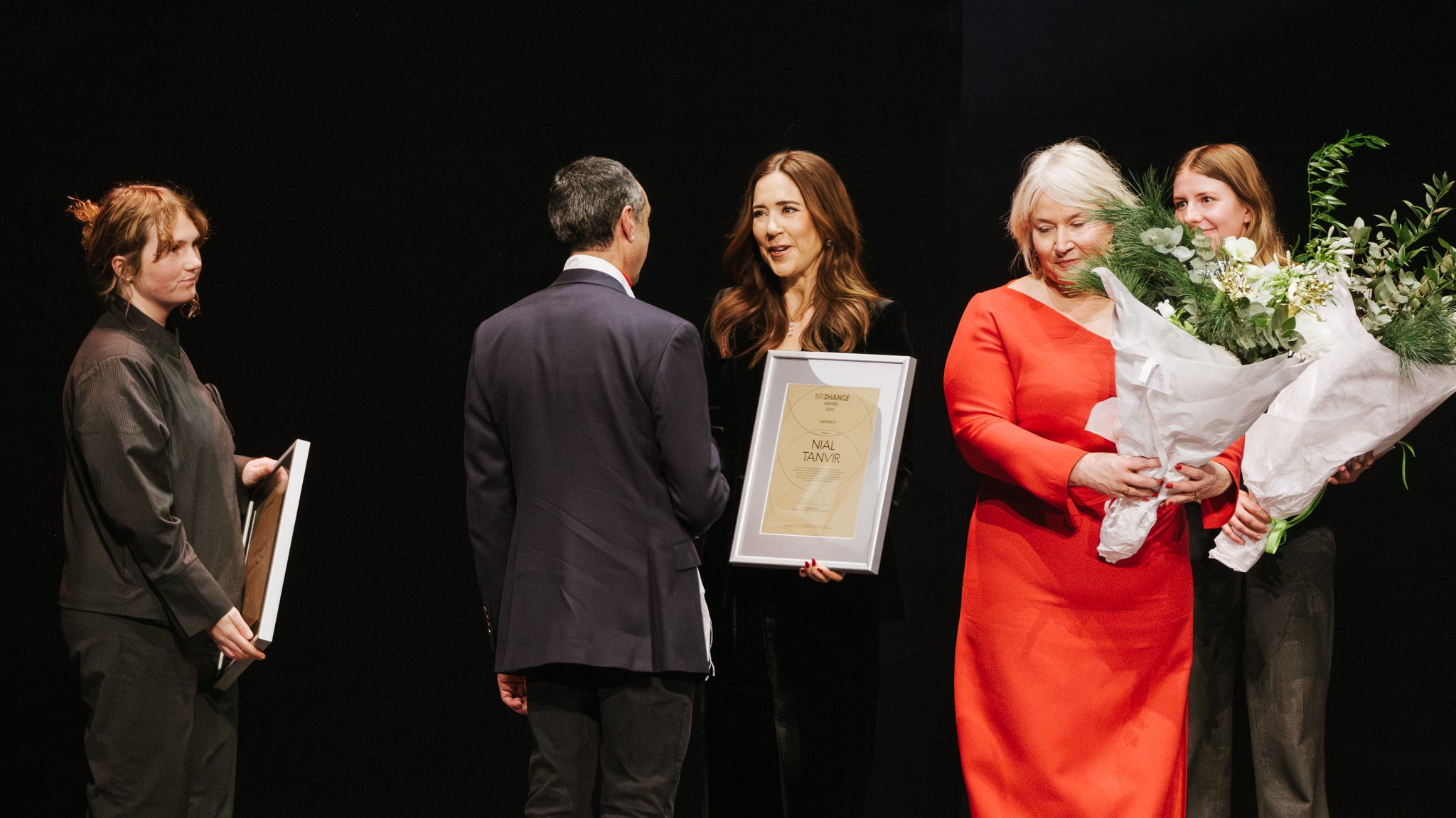
University of Leicester space scientists are part of an international collaboration awarded the Danish Ministry of Higher Education and Science’s inaugural Into Change Award.
The research group ENGRAVE has solved a mystery that has captivated scientists for more than half a century: Where do we all come from? The discovery has earned the group one of the world’s largest research prizes, the Into Change Award, worth DKK 8 million (around £940,000 GBP).
The European research team has discovered that the elements that make up our planet and our bodies originate from colossal collisions between the universe’s most extreme stars. With this, the group is uncovering nothing less than the building blocks that created our planet – and all of us.
ENGRAVE has made it possible to trace the origins of the universe’s heaviest elements, which are formed during massive kilonova explosions. These rare collisions have proven to be the cosmic factories of the heavy elements that make up roughly half of the periodic table. These elements include precious metals such as gold and platinum, rare earth elements and uranium – some of the fundamental building blocks that form our planet and our bodies.
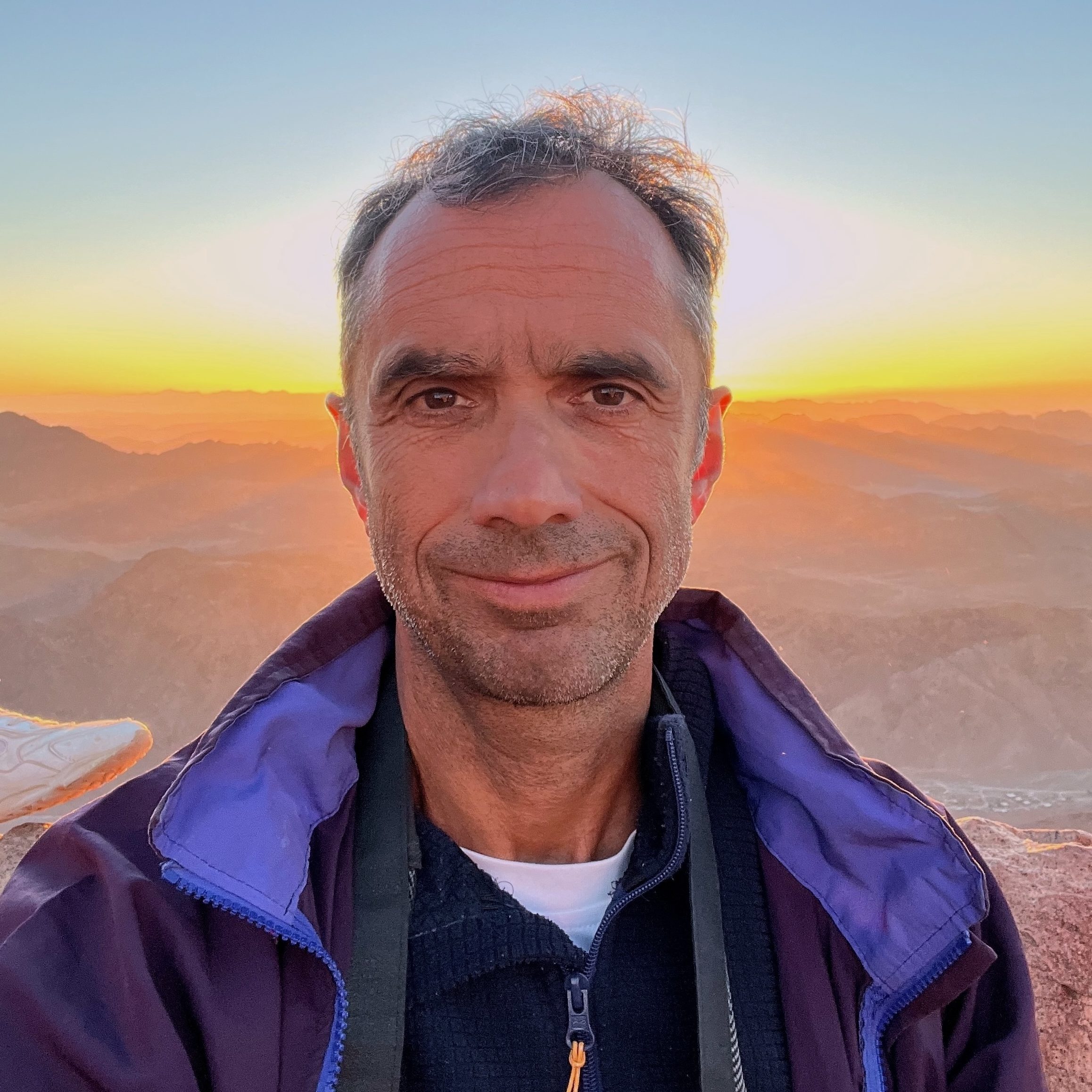
Professor Nial Tanvir from the University of Leicester, and chair of the governing council of the ENGRAVE group, says:

“The puzzle of the origin of the r-process elements has been one that generations of students have learnt about, and it is amazing to be part of its solution. It is especially great that it has led to the formation of such a dynamic and focussed group as ENGRAVE, which is now passing on the challenge of advancing this new field to the next generation of researchers.”
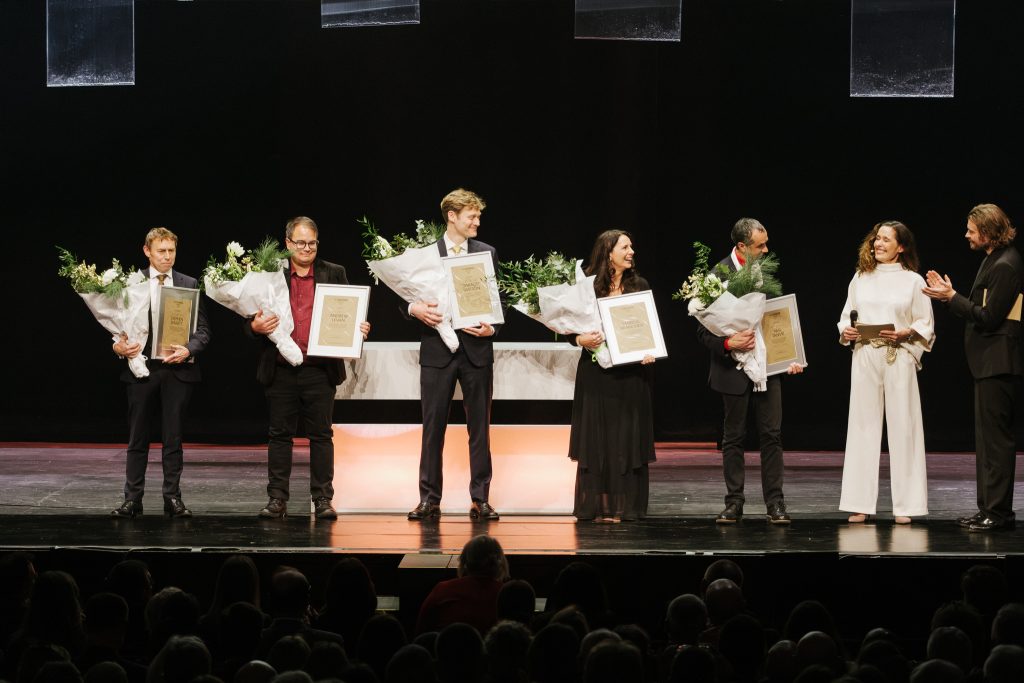
With the Into Change Award, Minister for Higher Education and Science Christina Egelund honours ground-breaking and exceptional European research. The prize is aimed at research groups in Europe and promotes scientific core values such as curiosity, collaboration, responsibility, respect and openness.
Minister for Higher Education and Science Christina Egelund says: “ENGRAVE shows what can be achieved when researchers across countries and institutions work together to solve the universe’s greatest mysteries. Its discovery of the building blocks that form our planet and ourselves is a brilliant example of European research: Curious, open and responsible. At the same time, the group has generously invited young talents to join its journey, ensuring the next generation of researchers can continue to explore the secrets of the universe. ENGRAVE is a role model for the research culture of the future.”
CEO of the Novo Nordisk Foundation, Mads Krogsgaard Thomsen, says: “It is impressive to see how ENGRAVE has delivered a discovery that reshapes our entire understanding of the universe’s heaviest building blocks. In addition to generating knowledge of clear societal relevance, it stands as a strong example of what European research can achieve when collaboration across 13 countries is given the right conditions. This is exactly the kind of research environment the Into Change Award is meant to recognise, and for us it is important to highlight a breakthrough like this – one that strengthens Europe’s knowledge base and advances our shared understanding.”
CEO of the Carlsberg Foundation, Lasse Horne Kjældgaard, says: “At the Carlsberg Foundation, we are pleased to help celebrate the ENGRAVE research group with the Ministry of Higher Education and Science’s new Into Change Award. At a time when basic science provides crucial answers to today’s challenges, it is important to honour the tremendous work that researchers accomplish together to expand our horizons and give us new insights into fundamental questions.”
CEO of the Villum Foundation, Lars Bo Nielsen, says: “The Villum Foundation is proud to help support and honour Europe’s most talented researchers and innovators. We need foundational research in everything the future holds. With these awards, we demonstrate that knowledge and innovation are the way forward toward a stronger and more sustainable Europe.”
ENGRAVE stands for ‘Electromagnetic counterparts of gravitational wave sources at the Very Large Telescope’ and brings together astronomers, physicists and cosmologists, primarily from 13 European countries. The collaboration was established in 2018 following the first observed neutron star merger (GW170817).
ENGRAVE’s work has opened a new era of multi-messenger astronomy, in which gravitational waves and light combine to reveal the universe’s most hidden processes. Drawing on data from the LIGO–Virgo gravitational wave interferometers, the European Southern Observatory’s Very Large Telescope based in Chile, the Hubble Space Telescope and the James Webb Space Telescope, the team has documented how cosmic explosions create heavy elements through the r-process, a neutron-capture mechanism triggered when ultra-dense objects called “neutron stars” collide.
ENGRAVE consists of scientists from many universities and research institutions around Europe but also has members from every continent of the world.
Facts About the Into Change Award
- The prize honours European research groups that have distinguished themselves through exceptional research of societal relevance at the highest international level.
- The research group’s work must be based on values such as curiosity, collaboration, responsibility, respect, and openness.
- The prize may be awarded to research groups within or across all scientific fields, including both current and former groups.
- In 2025, the prize consists of a total amount of DKK 8 million. Six nominated leaders of the research group receive a personal honorary prize of DKK 100,000. The remaining amount may be used for research activities within the winners’ field(s).
- The Carlsberg Foundation, the Novo Nordisk Foundation, and the Villum Foundation have each contributed DKK 1 million to the prize.
- The board of the Independent Research Fund Denmark evaluates the nominated candidates, after which a committee with international participation recommends candidates to the Minister for Higher Education and Science, who makes the final decision.
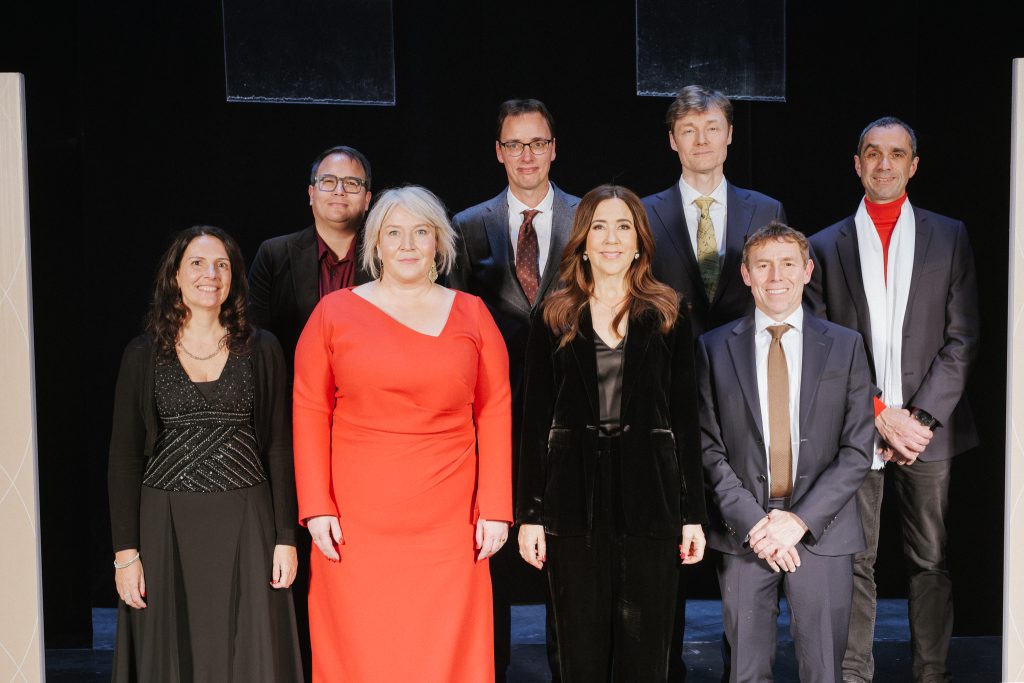
The Into Change Award was presented on 15 December at the Royal Danish Opera in Copenhagen by Queen Mary of Denmark.
Main image: Professor Nial Tanvir receiving the Into Change Award 2025 from Queen Mary of Denmark. Credit: Malthe Ivarsson