


Space Park Perspectives
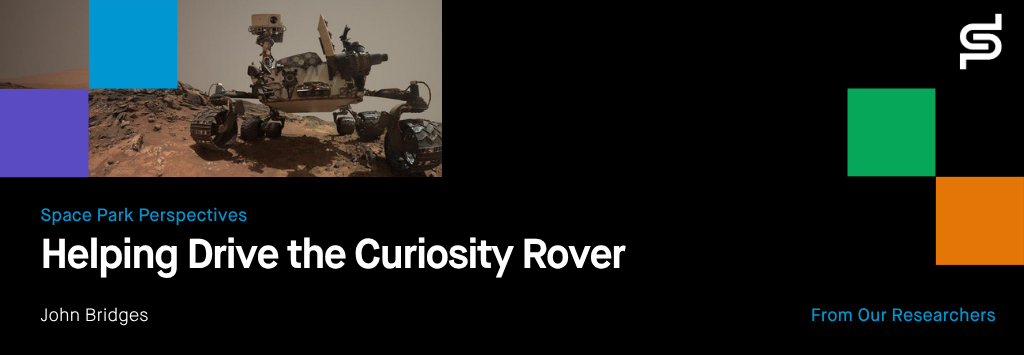
From a tense landing in 2012 to over a decade of discovery, Professor John Bridges reflects on Space Park Leicester’s role in one of humanity’s most ambitious planetary missions.
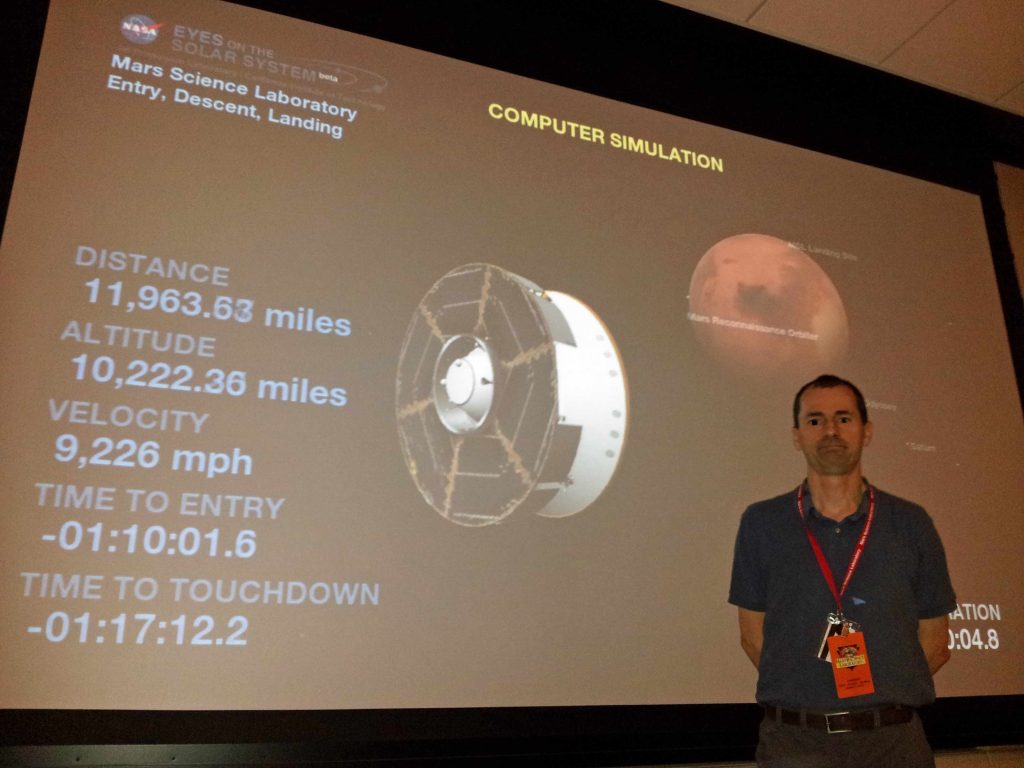
I was at the NASA Jet Propulsion Laboratory on 6 August 2012 as a Participating Scientist on the Mars Science Laboratory mission. It was a new and untested landing system—the Skycrane—designed to land the 900kg rover Curiosity from a 7 km per second approach to Mars, and so we were all nervous.
With a successful landing achieved, we have now driven a total of 36km, with over 2,100 separate drives across 4,900 sols of work (a sol is a Martian day). Every analysis and every drive takes careful planning. The mission operated at the Jet Propulsion Laboratory in Pasadena for the first 90 sols in 2012, but since then we have operated the rover remotely.
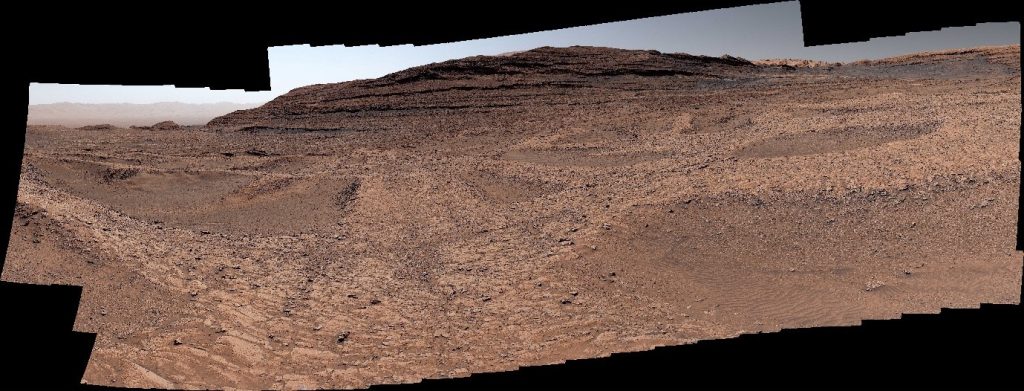
Over the past 14 Earth years (7.5 Mars years), the mission has increasingly used autonomous software for driving up Mount Sharp in Gale Crater and taking laser shots at the surrounding rocks. However, we still go through detailed planning meetings online three times a week. I lead the tactical science planning a few times each month, balancing data and power budgets with our science objectives.
Our list of discoveries includes finding ancient deep lake deposits, as well as fragments of the early crust on Mars that show a more evolved composition than was realised prior to the mission. Together with collaborators and PhD students, I have published numerous papers on the evolution of Mars and its habitability for primitive life based on the Curiosity results.
After 36 km of driving and climbing 900 m in elevation, there has, not surprisingly, been some wear and tear on the instruments. But with a bit of luck, this highly successful rover—and Space Park Leicester’s involvement in the mission—will continue for years to come.
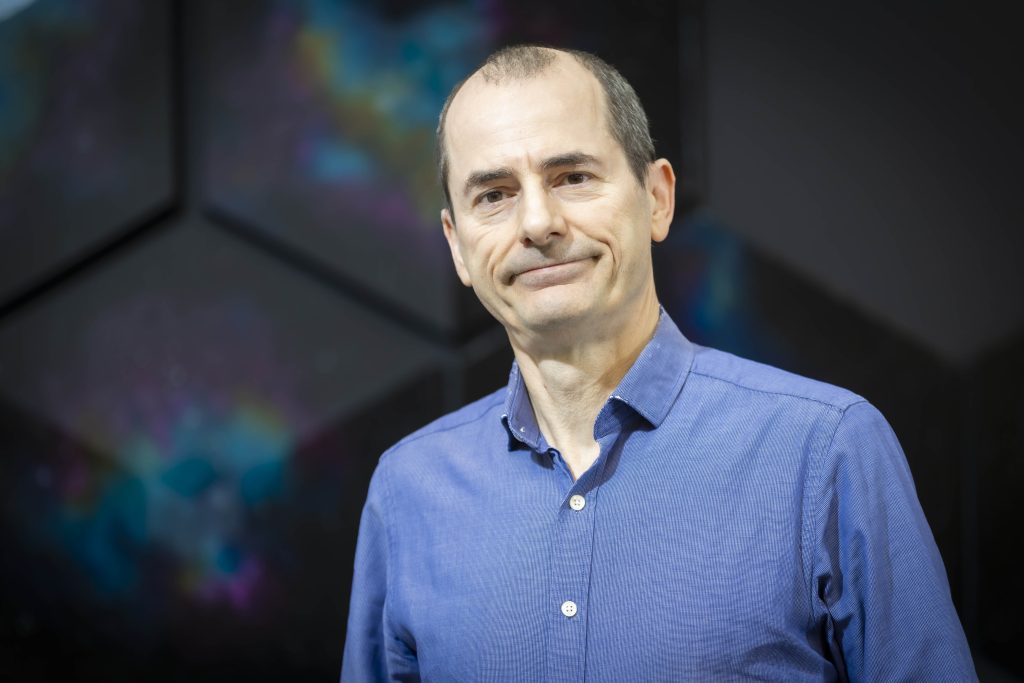
Professor John Bridges is a planetary scientist at the University of Leicester, whose research explores the geology of Mars and the early Solar System, including work on meteorites and samples returned from asteroids. He is a member of the Mars Science Laboratory team, studying the composition and habitability of the Martian surface.
Space Park Perspectives brings together science, society and the humanities to explore how space is shaping life on Earth — and beyond.
To explore Space Park Leicester partnerships, missions, residents, facilities, training programmes and innovation products, visit space-park.co.uk or to learn more about the University of Leicester visit le.ac.uk/.