


Interplanetary mission with Leicester-built tech begins Mercury arrival phase
A University of Leicester-built instrument designed to study the surface of Mercury has reached the final stage of its long voyage to the smallest and least-explored planet in our Solar System.
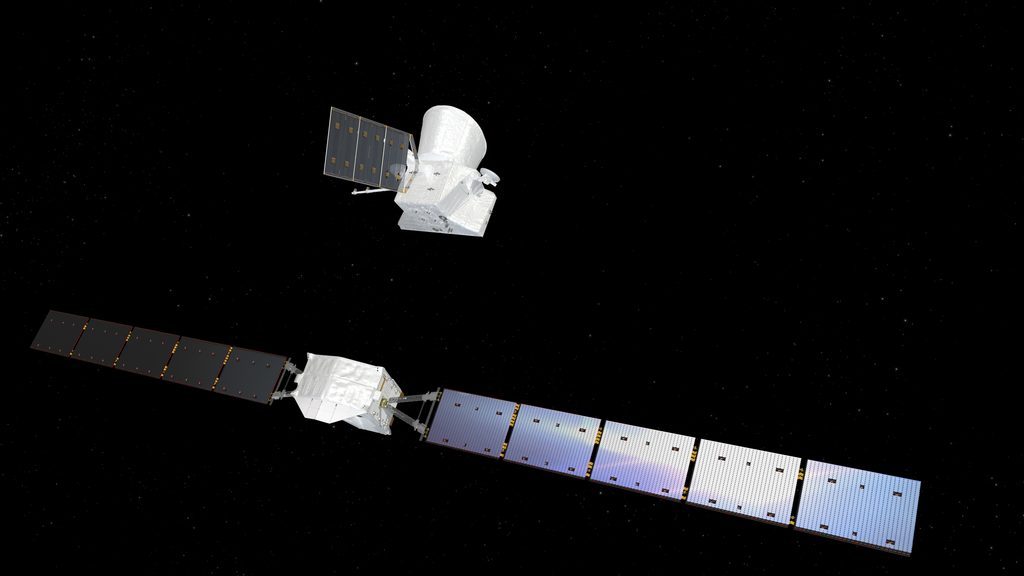
On 3 September 2026, ESA’s Mercury Transfer Module (MTM) successfully separated from the ESA/JAXA BepiColombo mission’s two science orbiters – the first major step in one of the most operationally challenging planetary arrival sequences ever attempted by ESA.
ESA’s Mercury Planetary Orbiter (MPO) and JAXA’s Mercury Magnetospheric Orbiter (Mio) will spend another three months entering orbit around Mercury while still connected together, before separating from each other in December 2026 and reaching their respective orbits.
On board the MPO is the Mercury Imaging X-ray Spectrometer (MIXS), designed to analyse the surface composition of Mercury by measuring fluorescent X-rays, emitted by the surface rocks after stimulation by high energy solar X-rays, with the help of the SIXS (Solar Intensity X-ray and particle Spectrometer). MIXS will also investigate the connection between Mercury’s space environment and the surface by observing X-rays on the nightside of the planet, produced by magnetosphere particles. MIXS was developed by a Europe-wide consortium led by the University of Leicester, including institutes and companies in the UK, Finland, Spain, Germany and France.
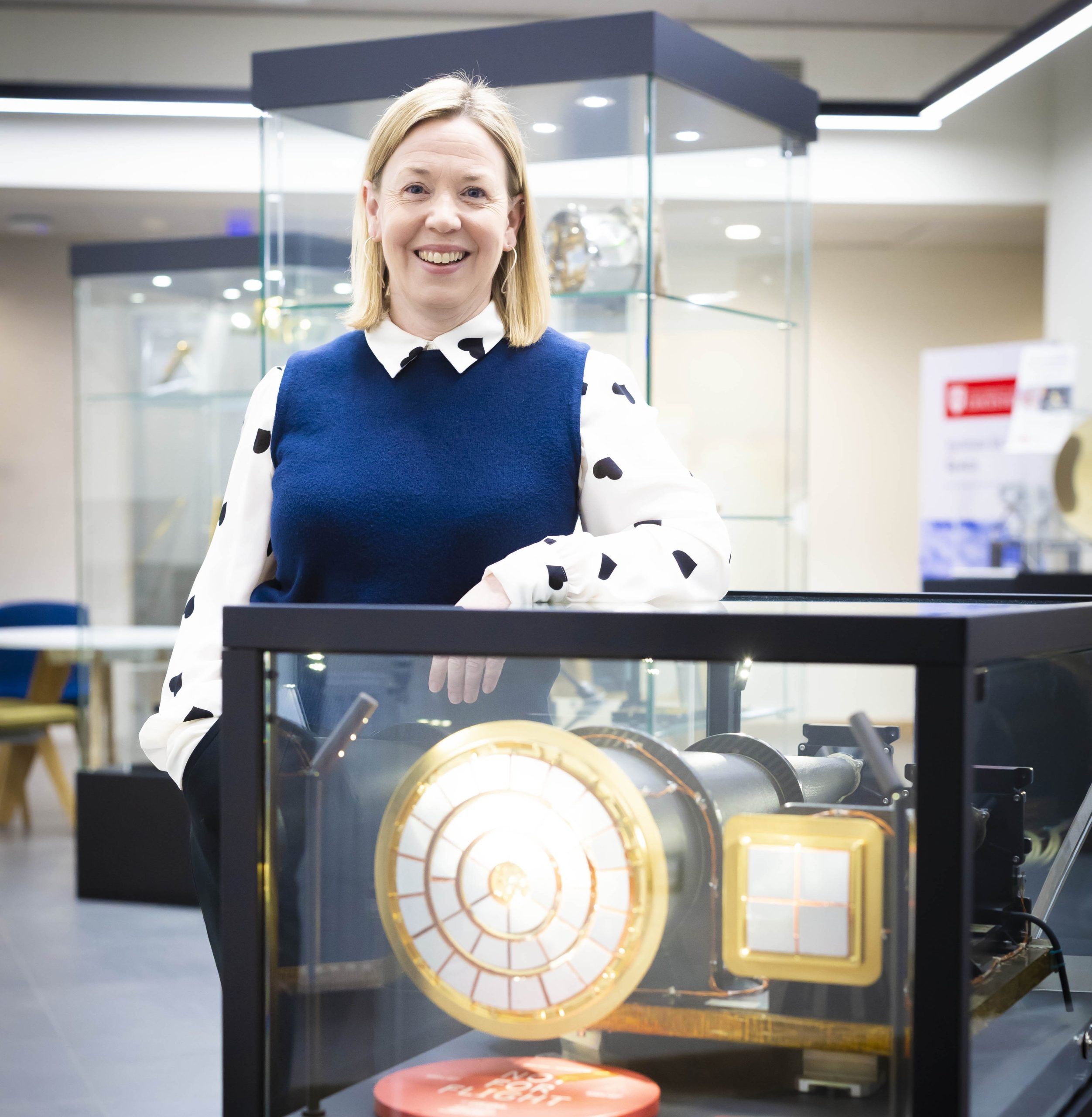
Professor Emma Bunce is Director of the University of Leicester’s Institute for Space and Principal Investigator (PI) for the MIXS instrument. MIXS is the only UK-led science instrument on the BepiColombo mission and is supported by the UK Space Agency.
Professor Bunce said:

“We have been waiting patiently for nearly eight years while BepiColombo has been on its extended interplanetary cruise to Mercury. The MIXS team is excited that the arrival sequence is now beginning which means that our wait is nearly over!

For MIXS the separation of the MTM means that MIXS can finally see into deep space.

The next major milestone for us to look forward to is our “first light” observations and calibration sequence due to start in the next couple of weeks.

It is going to be a very busy time but the team is ready for this incredible mission to begin!”
After eight years travelling through our Solar System, the BepiColombo mission has now entered its Mercury Arrival Phase. Multiple further manoeuvres will need to take place before the spacecraft are in their final orbits and ready to begin science in April 2027.
Once the mission begins, MIXS will work in tandem with the other remote sensing instruments on MPO to provide a detailed analysis of the planet including its interior structure, magnetic field, elemental composition, surface topography, and thermal properties.
Put together, this data will give us a precise global view of Mercury at high resolution, and a significant improvement on the data from the first mission to orbit Mercury, MESSENGER. It promises new insights into what the surface is made of, how it formed, how it changes over time, and what temperature it is. The MIXS data set will also provide information on surface-magnetosphere interactions by measuring the X-ray emission produced by particle impact with the surface on the nightside of the planet. Working with other instruments on both MPO and Mio, MIXS will contribute to our understanding of space weather at the closest planet to the Sun.
To explore Space Park Leicester partnerships, missions, residents, facilities, training programmes and innovation products, visit space-park.co.uk or to learn more about the University of Leicester visit le.ac.uk/.
Main image: Artist’s impression showing the Mercury Transfer Module separate from the BepiColombo Mercury Planetary Orbiter (MPO) and Mercury Magnetospheric Orbiter (MMO) composite spacecraft. Credit ESA/ATG medialab.
Explore More Stories
- International project using tech to support rural communities uses Leicester digital twin expertise
- Discover how to access free satellite imagery and Earth Observation data at Space Park Leicester Planet Day
- Time is running out to sign up for NASA-proven leadership training at Space Park Leicester
- Leicester experts involved in international project to strengthen climate research and education in Africa
- Leicester conference will empower the next generation of space professionals