


Space Park Perspectives

Breaking into the space sector isn’t just about rockets and research — it’s about people, skills and opportunity. As the UK space economy accelerates, Space Park Leicester is helping bridge the gap, opening new pathways for professionals to step into one of the world’s most exciting industries.
Working within the Space Industry is something that many have dreamed of. I myself have always been fascinated with the wonders of the universe. This curiosity drove me to study astrophysics and led me into the career I’m in today. As the UK Space Sector grows and develops, there have never been more opportunities to get a space related job. Facilities like Space Park Leicester bring together people from a wide range of areas. Academic staff working on answering the big questions to people creating services that improve lives, all underpinned by those running projects and building space hardware. Seeing them all working together on such an exciting topic (I may be biased), it’s no wonder why so many people dream of working in space. However, despite the opportunities, the space sector is still a tricky one to get into.
Space is a difficult domain, President Kennedy famously said: “We do these things not because they are easy, but because they are hard.” Space has often held the reputation of requiring some of the toughest academic disciplines as a barrier to entry. While I appreciate the ego stroking such a reputation lends, I’ve always felt that people find different subjects suit them differently. Personally, I always enjoyed science and maths, and while I would never say getting my degree was easy, I was always happy to dive into those subjects and work through the problems. I found working through those subjects much ‘easier’ than writing English essays, or learning how to give directions to the cinema in German. Despite this, one of the biggest challenges the UK Space Sector is currently facing is recruitment. In a recent nationwide survey over 40% of space related respondents reported issues with recruitment. (Source: UK Skills Report 2023 https://www.gov.uk/government/publications/space-sector-skills-survey-2023/space-sector-skills-survey-2023-report). While it would be easy to just declare we need to encourage more people to choose space related education and opportunities, the issue goes deeper. That same report highlighted that the biggest cause of these issues is not people choosing to study space topics, but rather the skills they have versus the skills required.
This skills discrepancy has come around following the shift in space applications we have seen over the last decade or so. For much of its life the Space Sector has been dominated by academic endeavours. The mystery of space drew us to lead curiosity driven exploration. Space projects designed to answer questions about our universe. Over the last decade or so this has rapidly evolved. As our ability to explore and utilise space has developed there has been a dramatic rise in the commercialisation of space. The Space Sector is now dominated by companies and organisations using space to provide products and services for Earth based activities. This has seen a shift in who is doing space. In 2024, 82% of UK Space Sector income was commercial. While research organisations still play key roles in the sector, the rise of space businesses is driving and increase in space sector employment. Commercial space organisations require a very different skillset to those focussed on academic work.
Addressing this skills gap is something that is vital if the UK Space Sector is to continue to flourish. Adaptation to academic training programmes is happening, but can often have long lead times. while those changes are being discussed and made, it may take many years for adjustments to make there way through student cohorts. Supporting these changes are where roles like mine come in. For the last few years, I have been supporting getting peoples entry into the space industry. Initially focussed on supporting young people’s journey into Space science through schemes like work experience, apprenticeships and supporting their academic progress. In recent times I have been seeking to offer similar opportunities not just to new students but existing professionals who may already have the skills but need support in transitioning that knowledge into the space sector.
Recently, we worked with the UK Space Agency and several key partners across the UK to develop a series of training programmes aimed at solving this issue. We created programmes aimed at giving people skills, knowledge and context to support them joining the space community. Last month we launched our most recent addition to that training landscape.
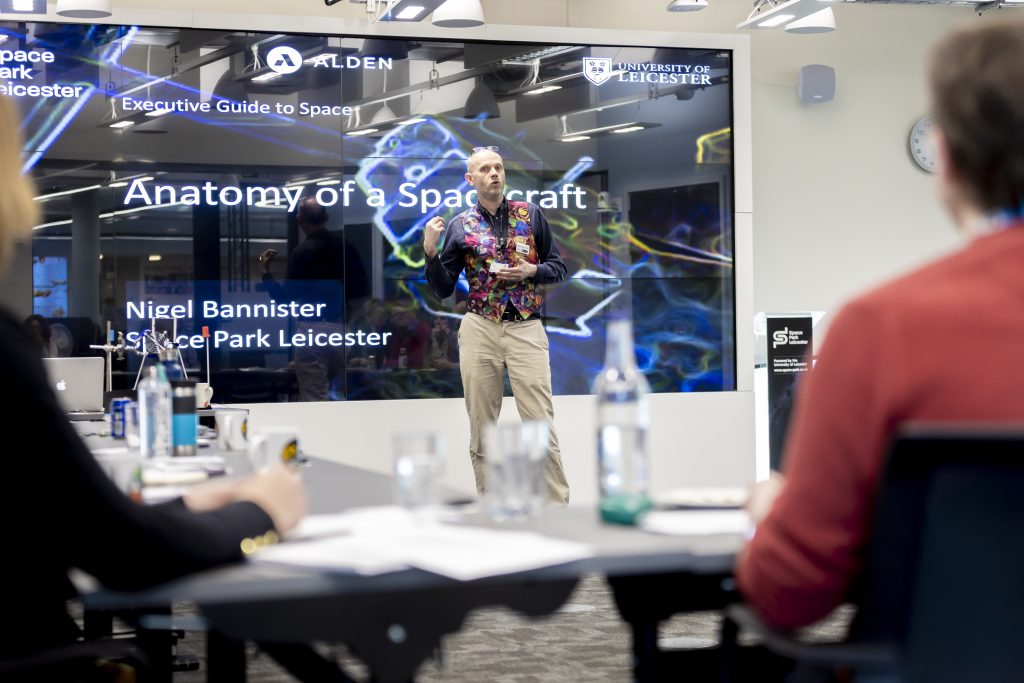
The Executive Guide to Space is a three day programme aimed at giving existing professionals vital context into the space sector. Providing a high-level overview of areas that space projects have to consider to be successful. Over the programme we discussed a wide range of topics. We looked at the space environment, the challenges it provides for hardware operating within it and how to remedy those issues. We talked about different orbital profiles and how they influence mission requirements but also mission outputs. Experts from Alden Legal joined us to highlight the regulatory frameworks that have to be navigated to get a mission off the ground, how to secure licenses to communicate with your spacecraft and much more.
We were lucky to welcome a diverse cohort to the programme, from social scientists wanting to research the impact of the space industry to Directors and CEO’s looking for a better understand of the sector their companies were moving into and supporting. Over the three days we supported these individuals with the knowledge and expertise our team have developed during our work within the Space Sector. The content was derived to address specific concerns raised by the Skills Survey as well building on our own expertise and experience. Bringing in these professionals also gave us an opportunity to engage with them directly so that we could understand their challenges and experiences developing our own understanding.
As someone who has always derived great joy from supporting peoples learning, as the course came to a close it was great to hear from participants as they shared how much they had learnt and how useful the course had been. This was bolstered by the data from the self-reported feedback. It showed that the cohort had significantly increased not only their space sector knowledge but also their comfort in discussing the topics covered. Successful programmes like this created by our team and others around the UK are vital to welcome experienced professionals into the industry. This is required more than ever to ensure that the UK can continue to develop its space sector. The opportunities enabled by space continue to grow and to continue our nations space heritage we need to encourage people to join us on that journey.
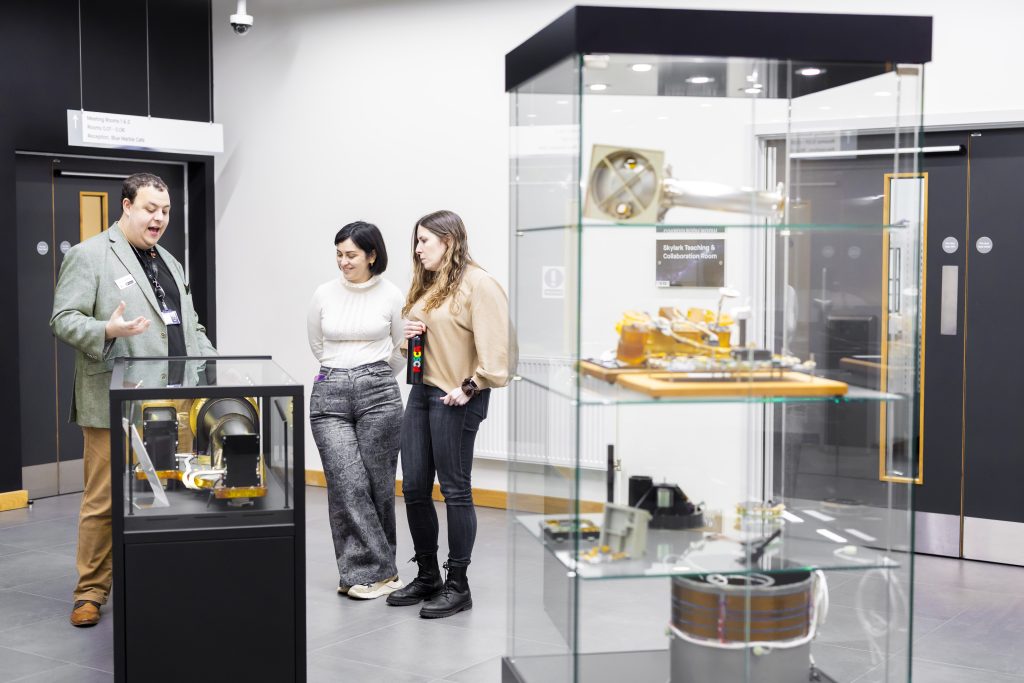
Space Park Leicester is filled with people who are passionate about the space sector and want to see it continue to grow. It is important to find ways to share our passion, using our experience to support those that want to join our industry. Opportunities like this allow us to do just that, to contribute in the UK’s ambition to be a space superpower. Addressing the skills gap that face our sector is vital to doing that. Here at Space Park Leicester, the team and I are pleased to be doing our part and together we will continue to pursue what President Kennedy called ‘the most hazardous and dangerous and greatest adventure on which man has ever embarked.’

By Josh Barker
Josh is a space sector specialist at Space Park Leicester, focused on developing skills, training and pathways into the industry. With a background in astrophysics, he works with partners across the UK to support workforce development and help professionals transition into the growing space economy.
Space Park Perspectives brings together science, society and the humanities to explore how space is shaping life on Earth — and beyond.
To explore Space Park Leicester partnerships, missions, residents, facilities, training programmes and innovation products, visit space-park.co.uk or to learn more about the University of Leicester visit le.ac.uk/.