


First X-ray imaging instrument at another planet releases first picture since launch
The first data from a UK-built instrument heading to Mercury has provided observations of one of the brightest X-ray sources in the sky from on board the ESA/JAXA BepiColombo spacecraft in the inner solar system.
A team led by the University of Leicester has been making calibration measurements with the Mercury Imaging X-ray Spectrometer (MIXS), one of the instruments on the two-spacecraft BepiColombo mission to Mercury, which begins its orbital insertion tomorrow (21 November) and prepares for the final stage of arrival at our solar system’s smallest planet.
After an eight-year journey, it is vital that the team checks how MIXS is performing. Although they have been monitoring the instrument during its trip, it was only in September, following the separation of the Mercury Transfer Module (MTM) from the joined science orbiters, Mercury Planetary Orbiter (MPO) and Mercury Magnetosphere Orbiter (MMO) or Mio, that MIXS could finally see into space for the first time and calibration measurements could be made before the orbit insertion sequence begins.
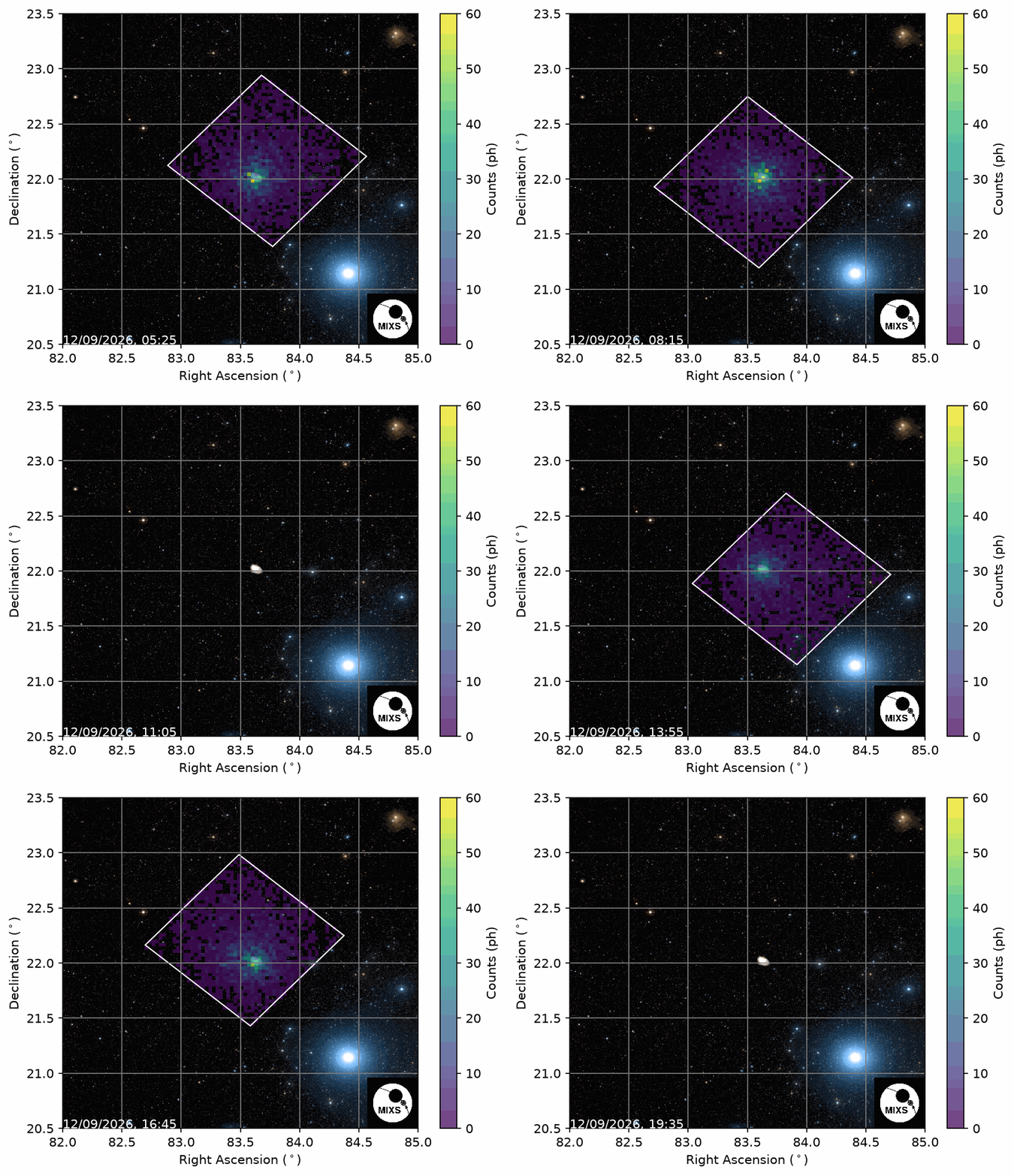
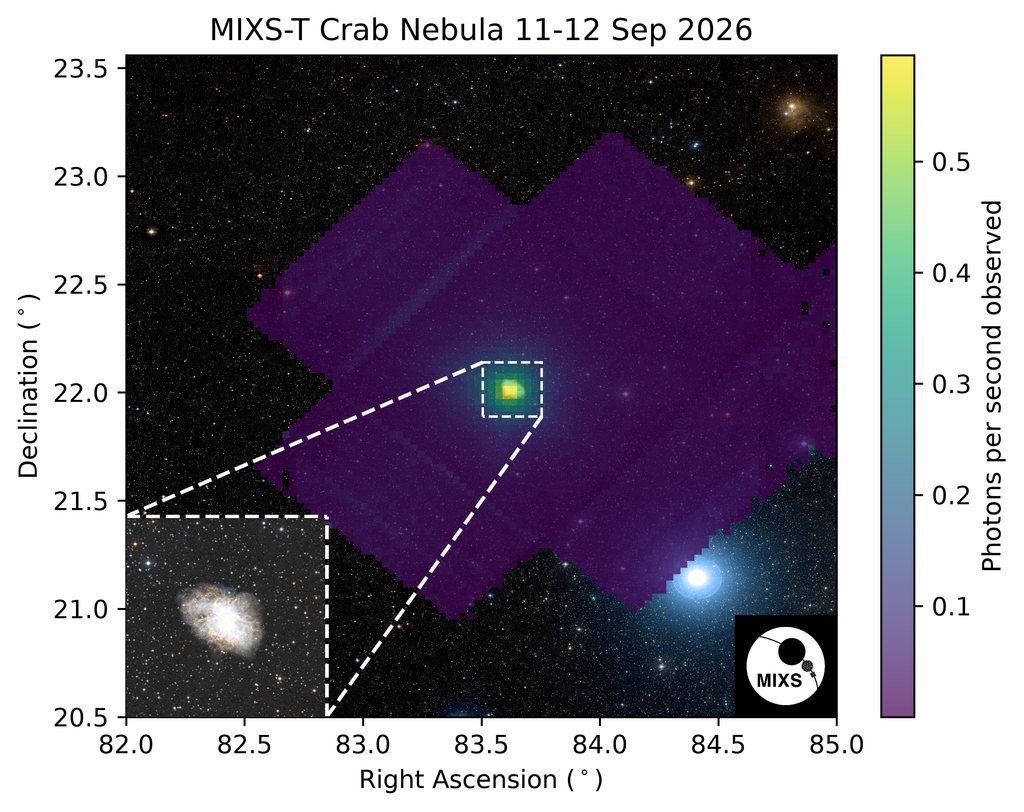
The Crab Nebula is 6500 light years away and a very well characterised astrophysical source of X-ray light. By observing it, the team can work out the performance characteristics of MIXS in space, and compare these with calibration measurements made with the same instrument in the laboratory in 2015. These observations provide MIXS’s first view of an astronomical X-ray source.
The main observation sequence consisted of 55 spacecraft slews, with 39 hours of observations during 11/12th September. Measuring how much the Crab Nebula’s image is spread across MIXS’s detector helps the scientists measure MIXS’s angular resolution, or how sharply it will be able to distinguish features on Mercury’s surface. They found this to be slightly better than when it was last measured in the lab in 2015.
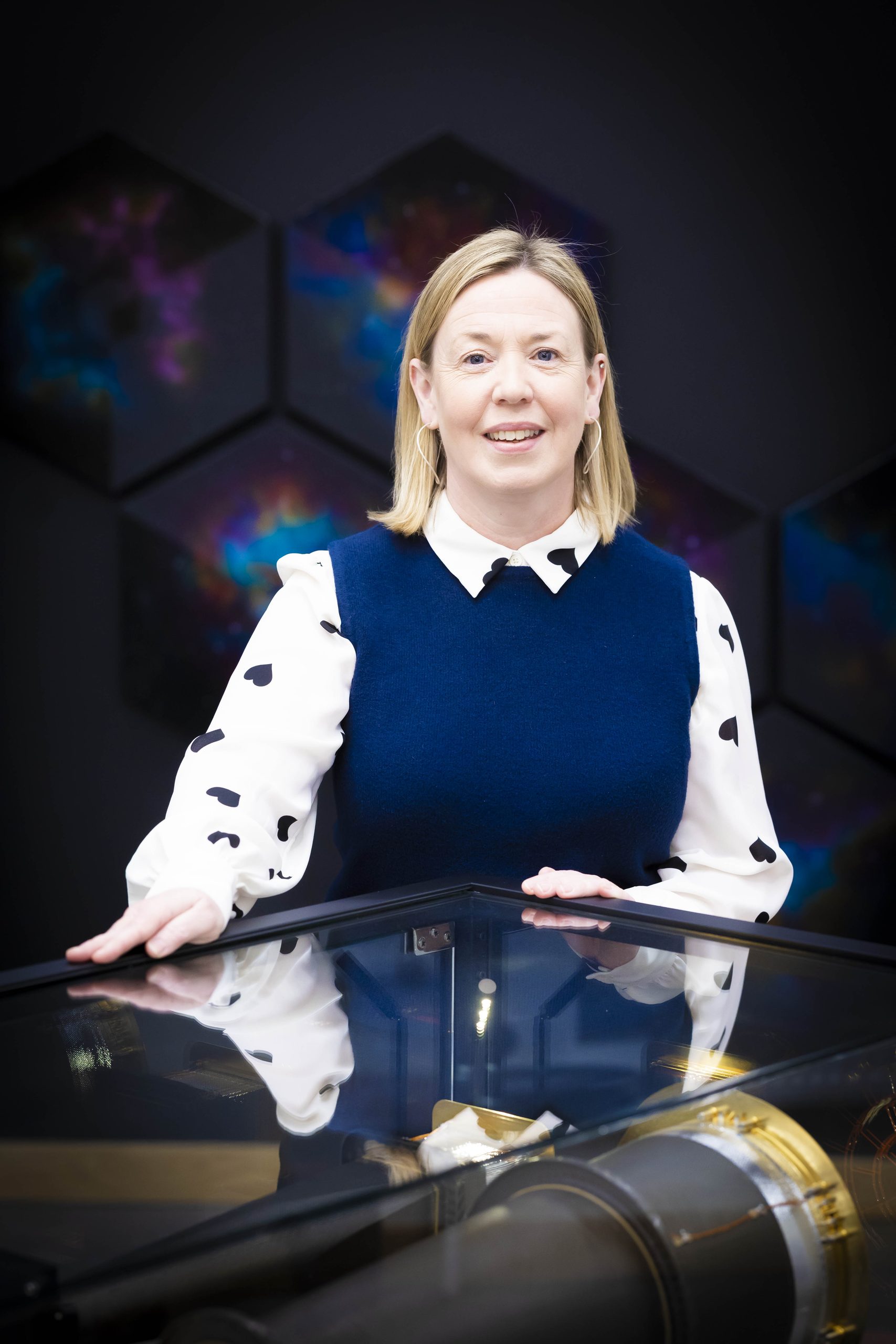
Professor Emma Bunce is Principal Investigator (PI) for the MIXS instrument and Director of the Institute for Space at the University of Leicester.
Professor Bunce said:

“We have waited a long time to make measurements with MIXS and it is fantastic to see it operating brilliantly in space. This is testament to our engineering and technical team, and our international partners who we have worked with over many years to build this incredible instrument. 80% of the technology on MIXS is new!

“During our calibration observations we have determined that MIXS is generally performing fantastically well in space! We have no effects in our images that are associated with ‘stray light’ (optical photons getting in when they should not).

"We continue to see effects of galactic cosmic rays as we did during cruise, but we understand these and can filter them out.

"We see some self-fluorescence which appears when the Sun is illuminating the optic, but this won’t affect our dayside observations of Mercury’s surface. And the detector has suffered no radiation damage after 8 years in space.

“We see some effects in the instrument that we are still studying and expect to undertake some optimisation procedures during the Mercury commissioning phase to fine tune MIXS in preparation for the science phase.”
The BepiColombo mission will study all aspects of Mercury – the smallest and least explored terrestrial planet in our Solar System – and scientists hope its data will improve our understanding about both the origin and evolution of a planet located close to its parent star, and the overall evolution of our Solar System.
MIXS is on board the mission’s Mercury Planetary Orbiter (MPO) and was developed by a Europe-wide consortium led by the University of Leicester. Born from Leicester’s expertise in X-ray astronomy, MIXS is the first imaging X-ray telescope operating on a planetary science mission, and it will work with other instruments to produce a global map of Mercury’s surface atomic composition in unprecedented detail. MIXS is the only UK-led science instrument on the BepiColombo mission and is supported by the UK Space Agency.
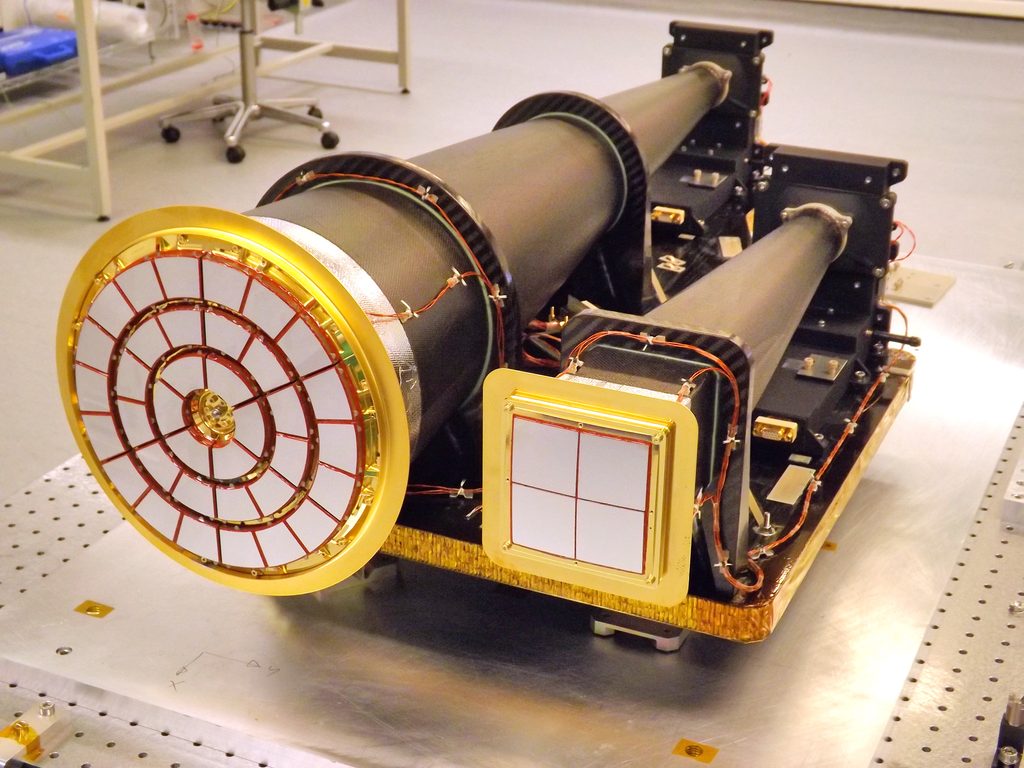
MIXS has been developed to analyse the surface composition of Mercury by measuring fluorescent X-rays, emitted by the surface rocks after stimulation by high energy solar X-rays, with the help of the Solar Intensity X-ray and particle Spectrometer (SIXS). MIXS will also investigate the connection between Mercury’s space environment and the surface by observing X-rays on the nightside of the planet, produced by magnetospheric particles.
Dr Adrian Martindale of the University of Leicester’s School of Physics and Astronomy, is MIXS Instrument Scientist and first became involved in the mission in 2003 as an undergraduate student
Dr Martindale said: “BepiColombo, and MIXS in particular, are like part of my family. I’ve been involved since I was an undergraduate and touched almost every part of the instrument before it was launched.
“This first data is mind-blowing to me. The last time we could see through this telescope it was in the basement under the School of Physics and Astronomy in Leicester, but after a rocket launch, eight years in space and 10 billion kilometres travelled it looks just the same. I can’t wait to see the science data it produces when we get into orbit.”
The instrument represents a lasting legacy to Professor George Fraser, who was the original Principal Investigator before his untimely death in March 2014 and mastermind behind the novel optic design.
Professor Bunce added: “We are thinking of George as we operate MIXS fully in space for the first time and know that he would be very, very proud of the team and delighted at our first light observations.”
BepiColombo’s ‘arrival phase’ began on September 3, with the separation of the Mercury Transfer Module (MTM) from the spacecraft stack. The composite spacecraft will enter orbit around Mercury on November 21 and MPO and Mio will separate from each other on December 9 to 10. The mission’s science phase is set to begin in April 2027.
UK funding for BepiColombo MIXS is provided by UK Space Agency (lead funding agency), STFC, the European Space Agency, and the University of Leicester.
MIXS was developed by a consortium of institutes and companies across Europe:
- UK – University of Leicester, The Open University, RAL, Magna Parva
- Finland – University of Helsinki, FMI, Patria, SSF, Oxford Instruments, Beneq
- Spain – INTA, CAB, Lidax, Crisa
- Germany – MPS, MPG-HLL, MPE, PNSensor
- France – PHOTONIS (now Exosens)
To explore Space Park Leicester partnerships, missions, residents, facilities, training programmes and innovation products, visit space-park.co.uk or to learn more about the University of Leicester visit le.ac.uk.
Main image: Professor Emma Bunce provides an update from the UK BepiColombo MIXS team based at Space Park Leicester
*Background images from the Digitized Sky Survey 2 (McLean & Greene, 2000), accessed by NASA’s Sky View facility (http://skyview.gsfc.nasa.gov) located at NASA Goddard Space Flight Center. The Digitized Sky Survey was produced at the Space Telescope Science Institute under U.S. Government grant NAG W-2166. The images of these surveys are based on photographic data obtained using the Oschin Schmidt Telescope on Palomar Mountain and the UK Schmidt Telescope. The plates were processed into the present digital form with the permission of these institutions.
Explore More Stories
- First X-ray imaging instrument at another planet releases first picture since launch
- Space Park Perspectives
- City farm receives much needed funding from CGI
- Leicester climate researcher to represent Bosnia and Herzegovina as a Youth Representative at COP31
- Space Park Leicester experts take climate research to the world stage at COP31